


Hybrid or Gas? Which 2026 Honda Model Is Right for You?
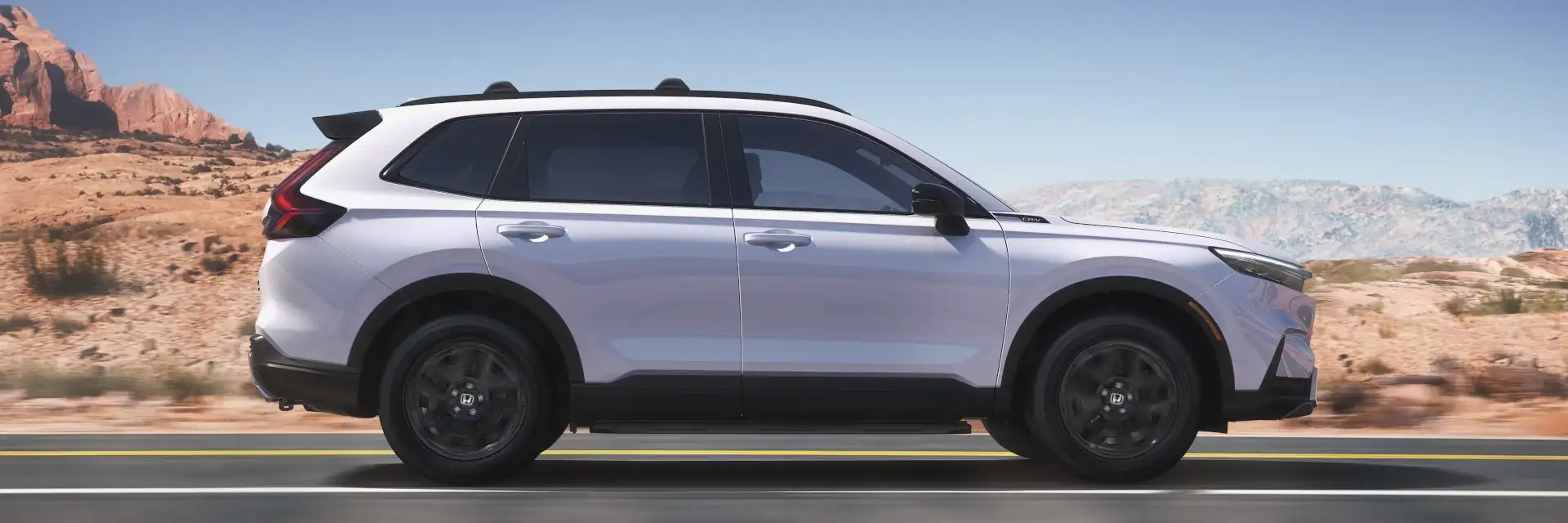
Choosing between a hybrid and a traditional gas-powered vehicle is an important decision—especially when you’re looking at the 2026 lineup from Honda. At Jerry Seiner Honda in San Juan Capistrano, CA, we want you to feel confident in your choice. Below, we walk through how the 2026 Honda model range stacks up: the advantages and trade-offs of gas vs hybrid powertrains, detailed specs from select models, and practical considerations to help you decide which aligns with your driving habits, budget and lifestyle.
What “Hybrid” Means vs “Gas” in the 2026 Honda Lineup
First, let’s clarify the terminology:
-
Gas / traditional powertrain = a conventional internal combustion engine (ICE) running on gasoline only, possibly turbocharged, with a standard automatic or CVT transmission.
-
Hybrid powertrain = a gasoline engine plus one or more electric motors, a battery pack, and a transmission system that blends electric + gas power to improve efficiency, sometimes add performance, or both.
In the 2026 Honda lineup, you’ll find both hybrids and gas-only versions across several models (sedans, hatchbacks, SUVs). This means you have real choices depending on whether your priority is fuel savings, performance, lower emissions, or just straightforward simplicity.
Key Areas of Comparison
When comparing gas vs hybrid, here are the major factors to evaluate:
1. Fuel Efficiency & Running Costs
Hybrid models shine when it comes to miles per gallon (mpg) and long-term fuel savings. For example:
-
The 2026 Honda Civic Sedan Hybrid is rated at 50 city / 47 highway mpg.
-
In contrast the gas‐only Civic (2026) is rated around 32 city / 41 highway mpg.
-
The 2026 Honda Accord gas model is estimated at about 32 mpg combined, while the Accord Hybrid can achieve up to 48 mpg combined.
-
The 2026 Honda CR‑V Hybrid generates about 204 hp and its estimated combined mpg is in the range of 37-40 mpg, whereas the gas CR-V comes with 190 hp and significantly lower efficiency.
So if you drive a lot of miles, especially in city stop-and-go or mixed driving conditions, the hybrid can offer meaningful savings in fuel cost over time.
2. Performance & Driving Experience
It’s not always the case that a hybrid sacrifices power—sometimes it adds it. For instance:
-
The CR-V Hybrid’s 204 hp output beats the 190 hp of the gas CR-V.
-
The Civic Hybrid’s 200 hp powertrain offers a sporty feel combined with efficiency.
On the flip side, hybrids may carry additional weight from batteries and electric motors, potentially influencing handling or ride feel compared to gas-only versions.
3. Purchase Price & Long-Term Value
Hybrids tend to carry a higher initial MSRP than their gas counterparts, because of the additional hybrid hardware. On the plus side, better fuel economy and often higher resale values can offset that premium over time. For example, the KBB review of the 2026 CR-V Hybrid notes that despite a higher purchase price, the improved efficiency and strong resale value make it an appealing choice.
4. Maintenance, Ownership & Lifespan Considerations
Modern hybrids from Honda use reliable systems, but potential hybrid owners should consider:
-
Battery pack life and warranty coverage
-
Availability of service for hybrid powertrain
-
Whether your driving habits will allow you to recoup the extra upfront cost through fuel savings.
In online discussions, some Honda owners note:
“I only drive 6,000-7,000 miles a year … the base model gets 32 combined mileage versus 43 for the hybrid … so in 100,000 miles I’d save about $5,000 in gas. That’s about the price difference between the base model and the hybrid.”
So lower annual mileage means it may take longer to break even on a hybrid.
5. Environmental Impact & Future Proofing
Hybrids generally emit less CO₂ and have lower fuel consumption. They’re also a step towards electrified driving without requiring full EV charging infrastructure. If your driving includes a lot of city time, or California commuting, this may be especially relevant.
Deep Dive: Selected 2026 Honda Models – Gas vs Hybrid
2026 Honda Civic Sedan (Gas vs Hybrid)
-
Gas version: Starting MSRP around $24,595, with EPA rating about 32/41 mpg (city/highway).
-
Hybrid version: Starting MSRP around $29,295, with EPA rating about 50/47 mpg.
-
Performance: Hybrid version delivers about 200 hp and a strong mix of efficiency + power.
-
Bottom line: If you’re mainly commuting and want maximum fuel efficiency, the Civic Hybrid is compelling. If you’re looking for lower upfront cost, simpler maintenance, and don’t drive massive miles, the gas version still offers a great all-round package.
2026 Honda Accord (Gas vs Hybrid)
-
Gas version: Around 32 mpg combined; details show some variants at ~30 city / 38 highway.
-
Hybrid version: Up to 48 mpg combined, with spacious interior, same trunk capacity as gas version (no battery intrusion) noted by MotorTrend.
-
Bottom line: The Accord Hybrid gives very strong efficiency and maintains the sedan’s comfort and room. If you expect high mileage driving or value fuel savings, Hybrid wins. If you’re on a stricter budget or drive fewer miles, the gas Accord remains practical.
2026 Honda CR-V (Gas vs Hybrid)
-
Gas version: 1.5L turbo 4-cyl, 190 hp.
-
Hybrid version: 2.0L + electric motors → 204 hp, AWD available standard in some trims, estimated combined mpg ~37-40.
-
Bottom line: For SUV buyers who want maximum flexibility, the CR-V Hybrid offers both better power and better efficiency. If you do short local drives or don’t require hybrid savings, the gas CR-V is still competent.
Considerations Specific to Southern California / San Juan Capistrano Region
Given the local driving context (commuting directions, traffic, freeway vs local roads), here are a few regionally relevant points:
-
Stop-and-go traffic: Hybrids tend to shine in heavy city traffic because regenerative braking can recover energy and the electric motor can assist at low speeds.
-
Freeway/highway driving: If your drives are mostly highway, the efficiency delta between gas and hybrid narrows somewhat.
-
California emissions/benefits: In California, hybrids may offer lower emissions, potentially helping with future resale and regulatory advantages.
-
Fuel prices & distances: Considering fuel prices in SoCal and typical distances, a hybrid might recoup its extra upfront cost sooner than in lower-mileage regions.
-
Local terrain and climate: Hilly terrain or canyon drives may favour gas in terms of simplicity, but the hybrid systems are well-tested by Honda so reliability is strong.
Decision Checklist: Which Should You Choose?
Use the following questions to guide your choice:
-
How many miles do you drive per year?
-
If 12,000+ miles annually: hybrid likely offers traction in savings.
-
If under 8,000 miles: gas may make more sense financially.
-
-
What’s your budget for purchase now?
-
Hybrids cost more upfront but save fuel long-term.
-
Gas models cost less now and might be simpler maintenance.
-
-
What kind of driving do you do?
-
Lots of city driving, frequent stops, local errands → hybrid advantage.
-
Long highway commutes, few stops → gas still efficient.
-
-
How long do you plan to keep the car?
-
If 10+ years, hybrid’s savings can accumulate.
-
If 3-5 years, lower cost gas might be better.
-
-
Do you care about fuel efficiency for environmental reasons?
-
Hybrid wins on efficiency and lower emissions.
-
-
Resale & reliability – any difference?
-
Honda’s hybrid systems are mature; resale values remain strong.
-
Gas models have decades of proven track record and simpler systems.
-
Summary & Recommendation
At Jerry Seiner Honda in San Juan Capistrano, CA, you’ve got access to both hybrid and gas versions of the 2026 Honda models. In summary:
-
Choose a Hybrid if: you drive a lot of miles, especially in mixed/urban traffic; you value fuel savings and efficiency; you plan to keep the car for many years; you want lower emissions and broader future-proofing.
-
Choose a Gas model if: your mileage is moderate; budget upfront is more important than fuel savings; you prefer simpler maintenance and lower initial cost; your driving is largely highway or you don’t anticipate the hybrid savings making huge impact.
Either way, Honda offers excellent reliability, strong resale value, advanced technology and safety features. At our dealership, we’re ready to help you compare side-by-side — test-drive both the gas and hybrid versions, review total cost of ownership scenarios specific to your driving habits, and choose the fit for you.
When you’re ready, stop by Jerry Seiner Honda in San Juan Capistrano. We’ll walk through the 2026 Honda lineup, show you the hybrid vs gas options, and help you find the model that makes the most sense.
0 comment(s) so far on Hybrid or Gas? Which 2026 Honda Model Is Right for You?